

Modernize Without the Meltdown

Legacy systems should not dictate your pace. We transform aging monoliths into modern, maintainable architectures — incrementally, without disrupting your business.

.NETJavaNode.jsReact
Book a free consultation
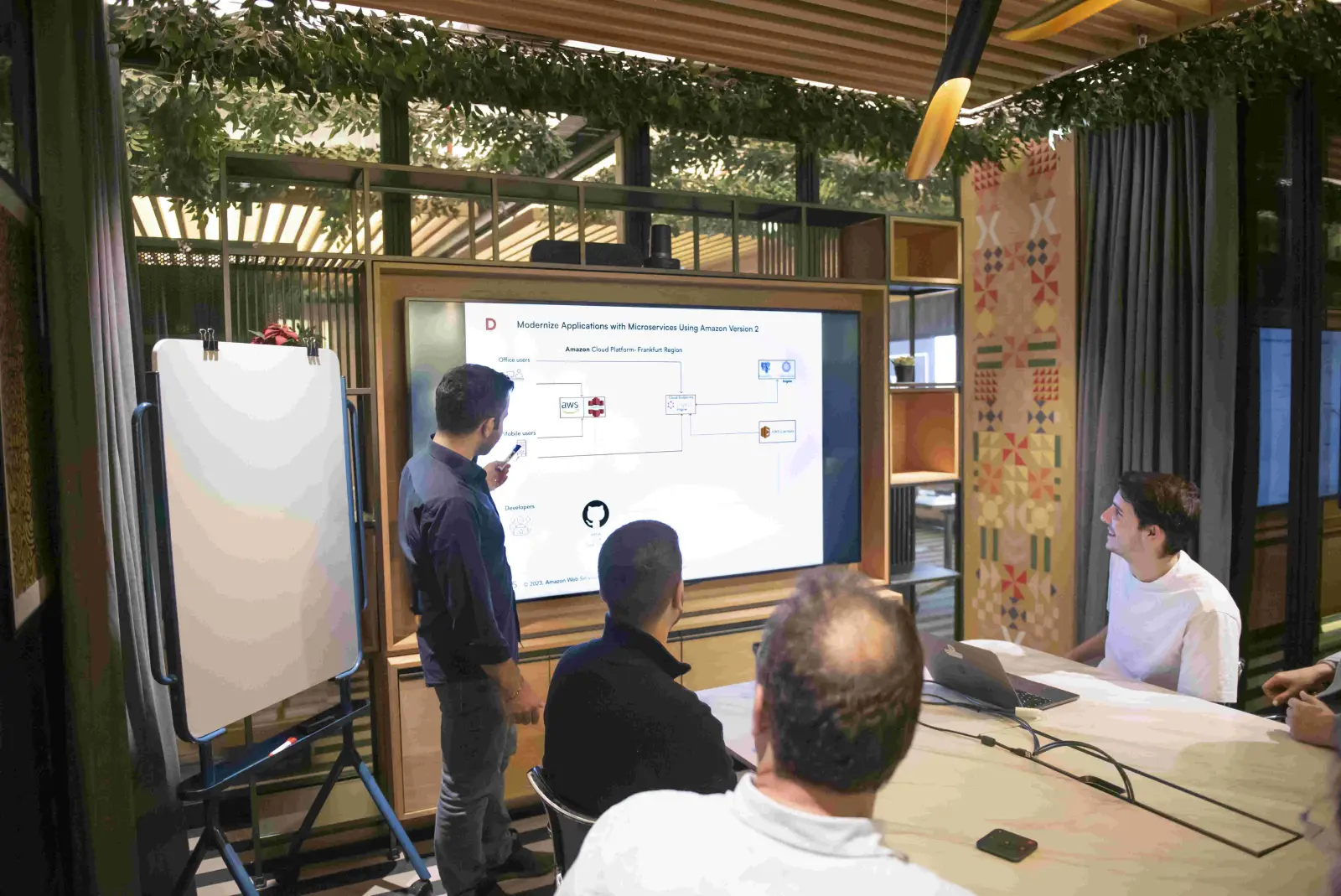
Deka Technology engineers working on legacy modernization projects
40+
Legacy systems modernized
0
Downtime during migration
4x
Faster deployment cycles
60%
Maintenance cost reduction
THE CHALLENGE

When legacy becomes liability

Every enterprise has them — systems built a decade ago that still run critical processes. They can't integrate with modern tools, resist every change, and the few people who understand them are retiring.

The longer modernization is postponed, the more expensive it becomes. Technical debt compounds, security vulnerabilities accumulate, and when a legacy system fails, the cost is measured in lost revenue and customer trust.

OUR APPROACH
01

Assess & Map

We reverse-engineer the existing system, document business rules, map dependencies and identify the modernization strategy — strangler-fig, re-platform or rebuild.

02

Decouple & Migrate

We extract components incrementally. New services run alongside the legacy system. Data is synchronized. Users see no disruption.

03

Validate & Decommission

Parallel operation until full confidence. Then the old system is retired cleanly — no zombie code, no abandoned databases.

CAPABILITIES

What we deliver

Application Assessment

Comprehensive analysis of your legacy landscape — architecture, dependencies, data flows, business logic and integration points. We deliver a modernization roadmap with effort estimates and risk profiles for every component.

Strangler-Fig Migration

Incremental replacement of legacy modules with modern services. The old system continues to run while new components take over — zero big-bang risk, continuous business value delivery.

Database Modernization

Migration from legacy databases (Oracle Forms, MS Access, DB2) to modern platforms. Schema redesign, data cleansing, ETL migration and validation — with full data integrity guaranteed.

Cloud-Native Refactoring

Re-architecting monolithic applications into microservices, containers and serverless components. We design for horizontal scaling, fault tolerance and operational simplicity.

API-First Integration Layer

Building REST and event-driven APIs around legacy systems as a first step. This unlocks integration with modern tools without touching the legacy core — a low-risk path to modernization.

Knowledge Transfer & Documentation

Reverse-engineering undocumented business logic and creating living documentation. We ensure your team understands the modernized system — no more single points of knowledge failure.

Is your legacy system slowing down the business?

Talk to an engineer who has modernized monoliths for banks, telecoms and retailers.

Discuss your project
40+
Legacy systems modernized
0
Downtime during migration
4x
Faster deployment cycles
60%
Maintenance cost reduction
PROJECT SPOTLIGHT
LEGACY MODERNIZATION

4,000-Employee FMCG Manufacturer

CHALLENGE

A 15-year-old monolithic ERP system serving 2,000+ users with undocumented business rules and zero test coverage.

APPROACH

We applied the strangler-fig pattern — extracting modules one by one into containerized microservices, building automated tests as we went, and running both systems in parallel.

RESULT

Full migration completed with zero downtime. Modern, testable codebase. Deployment frequency went from quarterly to weekly.

Zero downtimeWeekly deploys100% test coverage
USE CASES

Where we apply it

  • Retire mainframes without losing decades of business logic
  • Replace Oracle Forms with modern, accessible web apps
  • Decompose monoliths into independently deployable services
  • Move on-premise ERP to the cloud without business disruption
  • Consolidate legacy databases without losing historical data
TECHNOLOGY

Technologies

.NETJavaNode.jsReactDockerKubernetesAzureAWSTerraformApache Kafka
TECHNOLOGY PARTNERS
Microsoft Microsoft
AWS AWS
Red Hat Red Hat
FAQ

Common questions about legacy modernization

How long does a typical legacy modernization take? +

It depends on the system size and complexity. A single application module can be modernized in 8-12 weeks. A full enterprise system typically runs 6-18 months with incremental delivery — you see value from week one, not just at the end.

Do we need to stop using the legacy system during migration? +

No. We use the strangler-fig pattern, which means the old and new systems run in parallel. Users continue working on the legacy system while we migrate components one by one. There is no "big bang" cutover.

What if the legacy system has no documentation? +

This is common. We reverse-engineer business rules from code, database schemas and user interviews. We create living documentation as part of the modernization process — so your team ends up with better documentation than before.

Can you modernize our system without changing the user experience? +

Yes. We can preserve the existing UI while modernizing the backend, or we can redesign the interface gradually. The approach depends on your priorities — sometimes the UI is fine and only the architecture needs modernization.

What is the strangler-fig pattern? +

Named after a tree that grows around its host, the strangler-fig pattern incrementally replaces legacy components with modern services. New functionality is built in the modern system while old features are migrated one by one. Eventually the legacy system is fully replaced — with zero disruption.

Discuss your specific setup →

You may also need Software Engineering Cloud & Infrastructure

Related case studies

View all →
DIGITAL TRANSFORMATION
Order management transformation in e-retail
Anadolu Efes
INFRA · SSO
SSO for Oracle EBS with Active Directory
AgeSA

Let's build something that works.

No commitment. Just a clear conversation about your project.

Discuss your project